PAY US SECURELY


Small businesses often face one major challenge: how to attract more customers, generate quality leads and increase sales without spending too much money on advertising. Traditional marketing methods can make it difficult to understand exactly how many customers come from a particular campaign or how much revenue an advertisement generates.
This is where performance marketing becomes valuable.
How performance marketing helps small businesses is an important topic for business owners who want to grow their brands, reach potential customers and make smarter marketing investments. Unlike traditional advertising, performance marketing focuses on measurable actions such as website purchases, phone calls, enquiries, registrations and qualified leads.
Whether you run a local shop, restaurant, service-based company, e-commerce store, educational institute or startup, performance marketing can help you connect with the right audience and build a more predictable customer acquisition strategy.
In this article, we will explore what performance marketing is, how it works, its major benefits, the best advertising platforms, practical strategies and how small businesses can use it to increase their sales and business growth.
Performance marketing is a digital advertising approach where businesses focus on measurable results rather than simply increasing brand visibility.
In this marketing model, businesses invest in advertising campaigns designed to achieve specific objectives. These objectives may include generating leads, receiving phone calls, increasing website traffic, selling products, booking appointments or acquiring new customers.
For example, suppose you own a digital marketing agency in Kolkata. You want to attract business owners who need website development, SEO or Google Ads services.
You can run a Google Ads campaign targeting people searching for digital marketing services in Kolkata. You can also run Facebook and Instagram advertisements to reach local business owners who may be interested in your services.
Instead of measuring success only through likes, impressions or views, you can measure:
How many people clicked your advertisements.
How many visitors submitted enquiry forms.
How many people contacted your business through WhatsApp.
How much you spent to generate each lead.
How many leads became paying customers.
How much revenue your advertising campaigns generated.
This approach helps business owners understand whether their marketing investment is generating meaningful business results.
In simple terms, performance marketing means investing in measurable marketing activities that support specific business goals.
Performance marketing can help small businesses compete more effectively in the digital marketplace. It provides access to targeted advertising, measurable results and opportunities to improve campaigns based on actual customer behaviour.
Here are the major ways performance marketing supports small business growth.
Generating quality leads is one of the biggest challenges for small businesses.
Getting hundreds of enquiries does not necessarily mean your business will generate more revenue. What matters is attracting people who are genuinely interested in your products or services.
Performance marketing allows businesses to target audiences according to their location, interests, search behaviour, demographics and buying intent.
For example:
A website development company in Kolkata can target people searching for:
Website Development Company in Kolkata
Affordable Website Designing Services
E-commerce Website Development
Business Website Development Services
Similarly, a pest control company can advertise its services to homeowners and commercial property managers in specific service locations.
This makes it easier to reach potential customers who are more likely to enquire or purchase.
Business Benefit: More relevant enquiries, better lead quality and improved opportunities to convert prospects into customers.
Many small businesses cannot afford large advertising campaigns. They need marketing strategies that generate results while keeping expenses under control.
One of the biggest advantages of performance marketing is that businesses can start with a manageable advertising budget and increase spending based on campaign performance.
For example, a local business might start with an illustrative budget of ₹300–₹500 per day for a carefully targeted campaign, depending on the industry, competition and platform.
After collecting sufficient data, the business can identify which advertisements, keywords and audience segments are producing meaningful enquiries.
It can then:
Reduce spending on poorly performing advertisements.
Invest more in campaigns generating qualified leads.
Test different advertising creatives.
Improve landing pages to increase conversions.
Adjust targeting based on actual results.
This approach helps small businesses avoid spending their entire marketing budget without understanding what is working.
However, a smaller budget does not automatically guarantee profitable results. Campaign performance also depends on competition, advertising costs, offer quality and the sales process.
Advertising to everyone is rarely an effective strategy for a small business.
A local salon does not need to advertise to people living hundreds of kilometres away. Similarly, a Kolkata-based coaching institute may want to target students within selected neighbourhoods.
Performance marketing helps businesses reach audiences based on factors such as:
Geographic location.
Age groups and relevant demographics.
Customer interests and behaviour.
Search keywords and purchase intent.
Website interactions.
Previous engagement with advertisements.
For example, a restaurant in South Kolkata can focus its advertising on people in nearby areas who may be interested in dining, food delivery or special offers.
A real estate agency can target people searching for flats in specific locations.
By narrowing the audience, businesses can make their advertising more relevant and improve the chances of receiving valuable enquiries.
Traditional marketing can make it difficult to measure the direct impact of individual promotional activities.
For example, a business distributing printed flyers may not know exactly how many customers visited its shop because of those flyers.
Performance marketing provides detailed campaign information that helps businesses understand what happens after someone interacts with an advertisement.
Businesses can measure important metrics such as:
Click-Through Rate (CTR): The percentage of impressions that result in clicks.
Cost Per Click (CPC): The average amount spent for each advertisement click.
Cost Per Lead (CPL): The average advertising cost required to generate one lead.
Conversion Rate: The percentage of visitors or ad interactions that result in a desired action, depending on the measurement method used.
Customer Acquisition Cost (CAC): The total cost of acquiring a new paying customer.
Return on Ad Spend (ROAS): The revenue attributed to advertising divided by advertising expenditure.
These metrics help business owners understand where their money is going and which marketing activities are delivering value.
For accurate measurement, businesses should configure conversion tracking for important actions such as purchases, calls and form submissions. Google provides official guidance through its Google Ads conversion measurement documentation.
The ultimate objective of most business marketing campaigns is to generate revenue.
Performance marketing helps businesses attract potential customers and guide them towards taking meaningful actions.
For example, an e-commerce business selling clothing can run Facebook and Instagram advertisements featuring its latest collection. Interested customers can visit the website, browse products and complete their purchases.
A service-based business can use Google Search Ads to connect with people actively searching for its services.
An educational institute can promote course admissions through lead-generation campaigns.
The process generally involves:
Identifying potential customers.
Reaching them through appropriate advertising channels.
Presenting relevant products or services.
Encouraging them to enquire or purchase.
Following up with interested prospects.
Measuring the sales generated.
When the advertising strategy, customer experience and sales process work together, performance marketing can become an important source of business revenue.
Although performance marketing focuses on measurable actions, it can also support brand awareness.
Many customers do not purchase immediately after seeing a business advertisement for the first time. They may need to explore the company, compare prices, read reviews and understand its services before making a decision.
Consistent advertising across platforms helps businesses remain visible to potential customers.
For example, a new furniture brand can use Instagram advertisements to introduce its products, video campaigns to demonstrate product features and retargeting advertisements to reconnect with interested website visitors.
Over time, these activities can help customers become more familiar with the brand.
The important thing is to connect awareness campaigns with meaningful business objectives rather than measuring success through views alone.
Small businesses often have limited resources compared with established companies.
However, digital advertising platforms provide opportunities for smaller brands to reach specific customer segments without requiring the same advertising budget as a large corporation.
A local service provider can target customers in selected neighbourhoods. A niche product seller can focus on people interested in a particular category. A startup can test its product with a carefully selected audience before expanding its advertising.
For example, a small bakery in Kolkata can promote customised birthday cakes to customers in nearby areas instead of competing nationally with large bakery chains.
By focusing on a specific audience, offering personalised services and communicating a clear value proposition, small businesses can create meaningful competitive advantages.
Guesswork can lead to unnecessary advertising expenses.
Performance marketing gives business owners access to campaign data that can help them make better decisions.
Suppose you run two advertisements for the same service.
Advertisement A generates 30 enquiries.
Advertisement B generates 15 enquiries.
At first glance, Advertisement A appears to perform better.
However, after checking the enquiry quality, you discover that Advertisement B generates more serious buyers who eventually purchase your service.
This shows why businesses should not judge advertising performance only by the total number of enquiries.
They should also consider lead quality, sales conversion, customer acquisition cost and actual revenue.
Data-driven decisions help businesses identify which campaigns deserve more investment and which areas need improvement.
Not every website visitor becomes a customer during their first visit.
Some visitors may explore your products, check your pricing or read your service details before leaving the website.
Retargeting helps businesses reconnect with eligible people who have previously interacted with their brand, subject to platform rules, consent requirements and available tracking options.
For example, an online clothing store can show relevant advertisements to previous website visitors who viewed particular product categories but did not complete a purchase.
A coaching institute can reconnect with people who previously interacted with its course advertisements.
Retargeting can help remind potential customers about your business and encourage them to return.
However, businesses should use suitable audience settings, frequency controls and privacy-compliant tracking practices.
Performance marketing is not just about running advertisements for a few days. It is an ongoing process of testing, analysing and improving campaigns.
As businesses collect more reliable performance data, they can better understand:
Which customer segments respond to their offers.
Which products or services generate the most enquiries.
Which locations produce better customers.
Which advertising platforms support their business objectives.
Which landing pages convert visitors into customers.
These insights can support better budget allocation and more effective marketing decisions over time.
A business that consistently evaluates its campaign results is in a stronger position to develop a sustainable customer acquisition strategy.
Choosing the right advertising platform is important because different platforms serve different customer behaviours and business objectives.
Here are some popular performance marketing channels for small businesses.
Google Ads is particularly useful when customers are actively searching for products or services.
For example, someone searching for "best digital marketing agency in Kolkata" may already be interested in hiring a marketing agency.
Businesses can use Google Search Ads to reach people searching for relevant keywords.
Google Ads can help with:
Generating service enquiries.
Receiving phone calls.
Promoting local businesses.
Increasing e-commerce sales.
Reaching customers with high purchase intent.
For businesses offering services that people actively search for, Google Ads can be an important customer acquisition channel.
Facebook advertising helps businesses reach potential customers through audience targeting, different advertising formats and campaign objectives.
It can be particularly useful for local businesses, educational institutes, real estate agencies, service providers and e-commerce companies.
Businesses can use Facebook Ads for:
Lead generation.
Product promotions.
Local brand awareness.
Website traffic.
Special offers.
Customer retargeting.
A local gym, for example, can advertise membership offers to relevant audiences within its service area.
Instagram is useful for businesses whose products or services can be communicated visually.
Fashion stores, restaurants, salons, travel companies, beauty brands, home decor businesses and fitness studios can use Instagram advertising to showcase their offerings.
Popular formats include:
Image advertisements.
Video advertisements.
Story advertisements.
Reel advertisements.
Carousel advertisements.
A travel agency, for example, can promote a Darjeeling tour package using attractive travel videos and advertisements that encourage potential customers to enquire.
YouTube advertising can help businesses introduce products, explain services and build awareness through video content.
It can be useful for companies that need more time to explain the benefits of their products or services.
For example, a software company can create a demonstration video showing how its product works, while an educational institute can promote its courses through informative video advertisements.
Email marketing can help businesses communicate with existing customers and people who have voluntarily subscribed to receive updates.
Businesses can use email campaigns to share offers, product updates, useful information and follow-up messages.
Remarketing can complement these efforts by reconnecting with eligible audiences who have previously interacted with a business.
Together, these channels can support customer retention and repeat purchases.
Selecting an advertising platform is only the beginning. A successful campaign also requires proper planning, targeting, messaging and optimisation.
Here are some practical performance marketing strategies for small businesses.
Before spending money on advertisements, decide what you want to achieve.
Your goals may include:
Generating 50 qualified enquiries per month.
Increasing online product sales.
Receiving more appointment bookings.
Getting more phone calls.
Promoting a new service.
Acquiring new customers in a specific location.
Your campaign structure and measurement should be based on these objectives.
Understand who is most likely to purchase your products or services.
Consider their location, interests, problems, purchasing behaviour and expectations.
For example, a premium interior design company may target homeowners planning renovations, whereas an affordable mobile repair service may focus on customers within a smaller local service area.
Clear audience research makes advertising messages more relevant.
Your advertisement needs to capture attention and communicate why customers should consider your business.
An effective advertisement generally includes:
A clear headline.
An identifiable customer problem.
A relevant solution.
A compelling offer or reason to enquire.
A clear call to action.
For example:
Headline: Need More Customers for Your Business?
Description: Reach potential customers through targeted Google Ads and Facebook Ads campaigns designed around your business goals.
CTA: Get a Free Consultation.
Avoid making unrealistic promises. Your advertisement should communicate genuine value and set accurate customer expectations.
Sending advertising traffic to a poorly designed website can waste your marketing budget.
A landing page should clearly explain your product or service and make it easy for visitors to take the next step.
Important elements include:
Clear service information.
Attractive and professional design.
Pricing or offer details where appropriate.
Customer testimonials and reviews.
Contact information.
Click-to-call and WhatsApp options.
Simple enquiry forms.
Mobile-friendly functionality.
The easier you make it for customers to contact your business, the fewer unnecessary obstacles they face during the conversion process.
Tracking is one of the most important parts of performance marketing.
You should measure the actions that matter to your business, such as purchases, qualified leads, phone calls and appointment bookings.
Tools such as Google Analytics 4, Google Ads conversion tracking and Meta Pixel can support campaign measurement when configured correctly.
Google Analytics 4 allows businesses to identify important interactions as key events and analyse customer activity across their websites and apps. Read the official Google Analytics key events documentation.
For businesses that receive enquiries online but close sales offline, maintaining a CRM or lead-management system is also valuable. Where supported, offline conversion data can help connect advertising activity with completed sales.
Never assume that your first advertisement will produce the best results.
Test different headlines, images, videos, offers and audience segments.
Analyse the results and identify which combinations generate more valuable enquiries or sales.
For example, you might discover that a short customer testimonial video produces better-quality enquiries than a generic promotional graphic.
Keep improving your advertisements based on actual business outcomes.
Generating a lead does not guarantee a sale.
Many businesses lose potential customers because they respond too late or fail to follow up consistently.
Create a clear lead-handling process:
Record every new enquiry.
Contact the prospect promptly.
Understand their requirements.
Share relevant information and pricing.
Follow up with interested customers.
Record the final sales status.
This ensures that your advertising investment is supported by an effective sales process.
Let's understand how performance marketing works through a hypothetical example.
Suppose a small website development company in Kolkata wants to generate more customers.
The company offers business websites, e-commerce website development and custom website designing services.
It decides to run a Google Ads campaign targeting relevant search keywords and a Facebook campaign targeting local business owners.
Illustrative monthly advertising results:
|
Performance Metric |
Result |
|
Monthly ad spend |
₹15,000 |
|
Total enquiries |
50 |
|
Qualified leads |
30 |
|
Paying customers |
6 |
|
Average project value |
₹15,000 |
|
Total attributed revenue |
₹90,000 |
|
Revenue-to-ad-spend ratio |
6:1 |
In this example:
The business spends ₹15,000 on advertising.
It receives 50 enquiries.
Out of those enquiries, 30 are qualified.
Six customers purchase website development services.
The total attributed project revenue is ₹90,000.
The revenue-to-ad-spend ratio is ₹90,000 divided by ₹15,000, which equals 6.
This is an illustrative ROAS-style calculation, not net profit or guaranteed business performance. It excludes website production costs, employee expenses, taxes, agency fees and other operating costs.
The example demonstrates why businesses should measure the entire journey from advertising expenditure to actual customer acquisition.
Even a well-designed campaign can underperform when important marketing fundamentals are ignored.
Here are some common mistakes businesses should avoid.
1. Targeting Everyone: Broad targeting can attract irrelevant enquiries. Define your ideal customer and service locations.
2. Focusing Only on Likes and Impressions: Engagement is not the same as revenue. Track meaningful conversions and qualified leads.
3. Ignoring Landing Page Quality: A confusing website or complicated enquiry form can reduce conversion opportunities.
4. Not Tracking Conversions: Without proper tracking, it becomes difficult to identify which campaigns generate valuable actions.
5. Stopping Campaigns Too Early: Advertising platforms need sufficient data to evaluate performance. Make decisions based on meaningful data rather than reacting to a few early results.
6. Ignoring Lead Follow-Ups: Delayed communication can cause potential customers to choose competitors.
7. Making Unrealistic Advertising Promises: Misleading offers can damage customer trust and generate poor-quality leads.
8. Failing to Analyse Campaign Performance: Regularly review your results and make improvements based on business objectives.
There is no fixed advertising budget that works for every small business.
The right amount depends on your industry, target location, competition, average customer value, profit margins and business objectives.
A new business can begin with a controlled testing budget, provided it is sufficient to generate useful campaign data.
For example, a local service business might test a campaign with ₹9,000–₹15,000 in monthly media spending. A competitive industry may require a higher budget.
Before deciding your advertising expenditure, consider:
Your monthly business growth target.
Your average order or project value.
How much you can afford to spend acquiring a customer.
Your current conversion rate.
Your expected profit margin.
The advertising costs in your industry.
Remember that the advertising budget is not the only expense. You may also need to account for creative production, landing page development, conversion tracking and campaign management.
Start with a realistic budget, evaluate the results and scale only when your customer acquisition process is working effectively.
Today's customers use search engines, social media and online platforms to discover and compare businesses before purchasing.
A business that does not have a strong digital presence may miss opportunities to connect with these potential customers.
Performance marketing helps small businesses create measurable advertising campaigns that focus on specific customer actions.
It can support business growth by helping companies:
Reach relevant customers.
Generate quality leads.
Increase product and service sales.
Control and optimise advertising expenditure.
Understand customer behaviour.
Improve marketing return on investment.
Build a more consistent customer acquisition process.
However, advertising alone cannot solve every business problem. Product quality, pricing, customer service, reputation, website experience and sales follow-up all contribute to business success.
The most effective strategy combines targeted advertising with a strong customer experience and continuous performance analysis.
Understanding how performance marketing helps small businesses can make a significant difference when planning your digital growth strategy.
Instead of spending money on advertising without knowing the outcome, businesses can focus on measurable actions such as enquiries, purchases, bookings and customer acquisition.
With the right combination of Google Ads, Facebook Ads, Instagram Ads, conversion tracking, landing page optimisation and lead management, small businesses can build more effective digital marketing campaigns.
The key is to start with clear goals, understand your target audience, monitor campaign performance and keep improving your strategy.
Whether you are running a local shop, startup, service company, restaurant or e-commerce business, performance marketing can help you reach potential customers and create better opportunities for sustainable growth.
Ready to Grow Your Business Online?
Invest in a result-oriented digital marketing strategy that focuses on reaching the right audience, generating quality leads and improving business performance. Start building your digital presence with a strategy designed around your business goals.
Performance marketing for small businesses is a digital advertising strategy focused on measurable outcomes such as leads, sales, website enquiries, phone calls and customer acquisition. It helps businesses understand the results generated by their marketing campaigns.
Performance marketing helps small businesses reach their target audience, generate qualified leads, increase sales, manage advertising budgets and measure campaign performance. It also helps business owners identify which advertising channels generate the most valuable customers.
Yes. Performance marketing can be suitable for small businesses because campaigns can be designed around specific budgets, locations and objectives. Businesses can begin with controlled testing and gradually increase investment when their campaigns produce sustainable results.
The best platform depends on the business model and target audience. Google Ads is useful for reaching people actively searching for products or services, while Facebook and Instagram Ads can help businesses discover and engage relevant audiences. YouTube Ads can support video-based promotion.
Performance marketing costs in India vary according to the industry, competition, target location and advertising platform. A small business might start with a controlled monthly advertising budget of ₹9,000–₹15,000 for testing, but the required investment depends on its individual goals.
Traditional marketing generally focuses on broader promotional activities such as newspaper advertisements, hoardings and printed flyers. Performance marketing focuses on measurable digital outcomes, allowing businesses to track actions such as clicks, leads, purchases and advertising returns.
You can measure campaign success through metrics such as cost per lead, click-through rate, conversion rate, customer acquisition cost, revenue and return on ad spend (ROAS). The most important metrics depend on your business objectives.
Yes. Local businesses can use Google Ads, Facebook Ads and Instagram Ads to reach potential customers in specific geographic areas. Businesses such as salons, restaurants, coaching institutes, real estate agencies and home service providers can use these campaigns to generate relevant enquiries.
Performance marketing and SEO serve different but complementary purposes. Paid performance campaigns can help businesses reach potential customers through advertisements, while SEO helps websites attract relevant organic traffic from search engines. Combining both strategies can support long-term digital growth.
Some advertising campaigns can generate initial clicks and enquiries shortly after launch. However, achieving consistent and profitable results may require ongoing testing, audience optimisation, conversion tracking and improvements to the sales process. Results depend on the industry, budget, offer and competition.
Important performance marketing metrics include CPC (Cost Per Click), CTR (Click-Through Rate), CPL (Cost Per Lead), conversion rate, CAC (Customer Acquisition Cost) and ROAS (Return on Ad Spend). Businesses should prioritise the metrics directly connected to their revenue and growth objectives.
A website is not compulsory for every campaign, as some advertising platforms support lead forms and direct messaging. However, a professional, mobile-friendly website or landing page can help establish credibility, explain services, showcase customer reviews and generate enquiries.

Meta Ads Performance Marketing: Strategy, Leads & ROI
Date : 06 Nov, 2026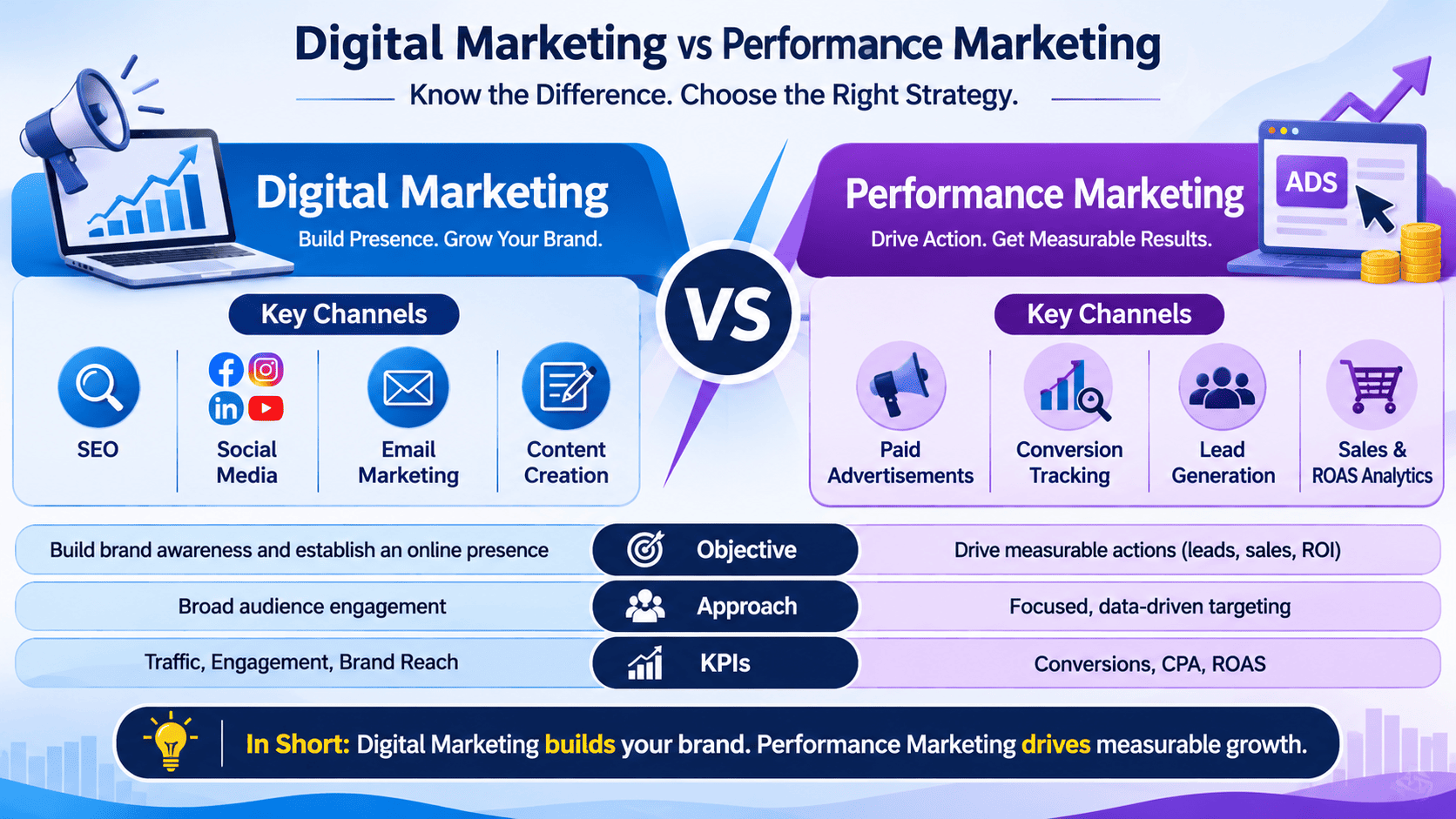
Performance Marketing vs Digital Marketing: Key Differences
Date : 04 Nov, 2026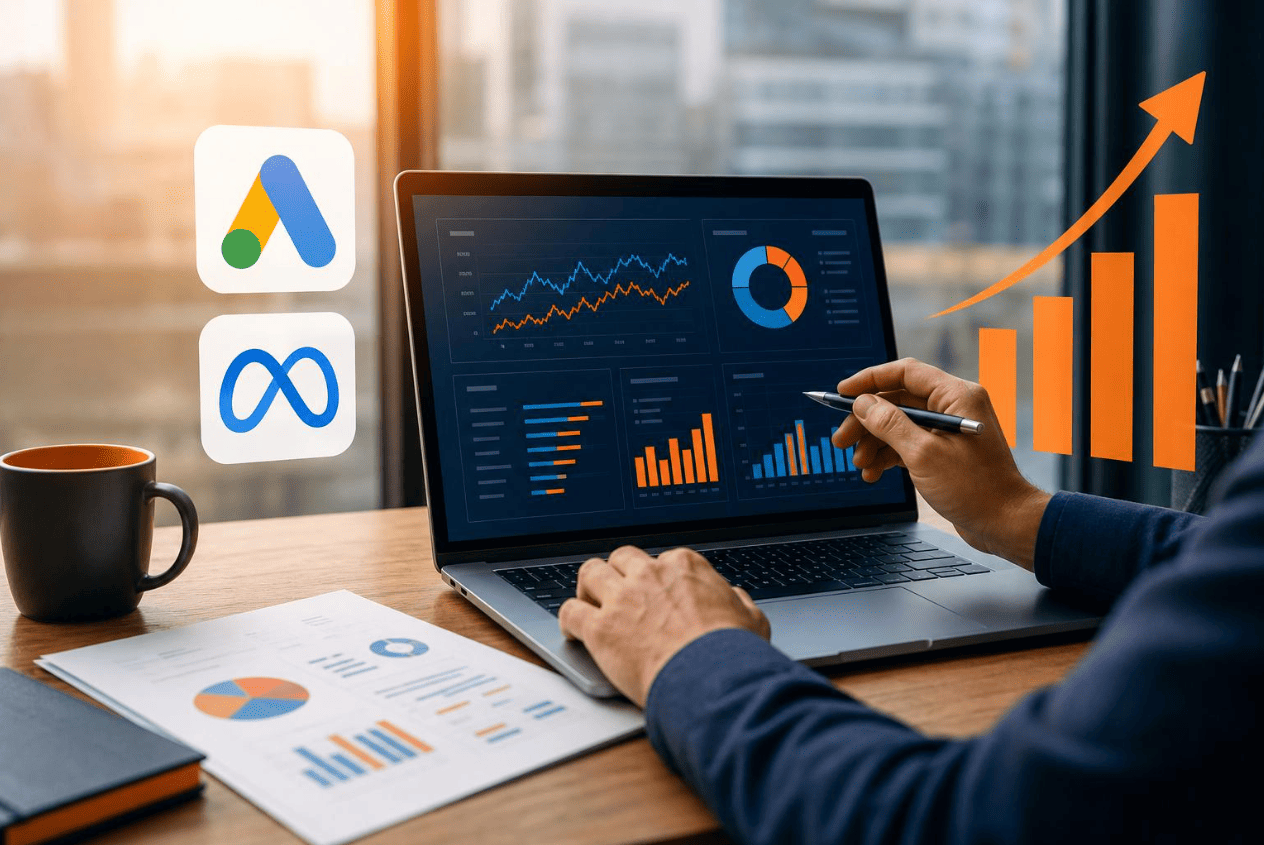
Performance Marketing Agency Near Me | Grow Your Business
Date : 02 Nov, 2026
How Performance Marketing Helps Small Businesses Grow Fast
Date : 31 Oct, 2026
Best performance marketing agency in Kolkata
Date : 27 Oct, 2026
Performance Marketing Agency in Kolkata | Digital Seeds
Date : 26 Oct, 2026