PAY US SECURELY

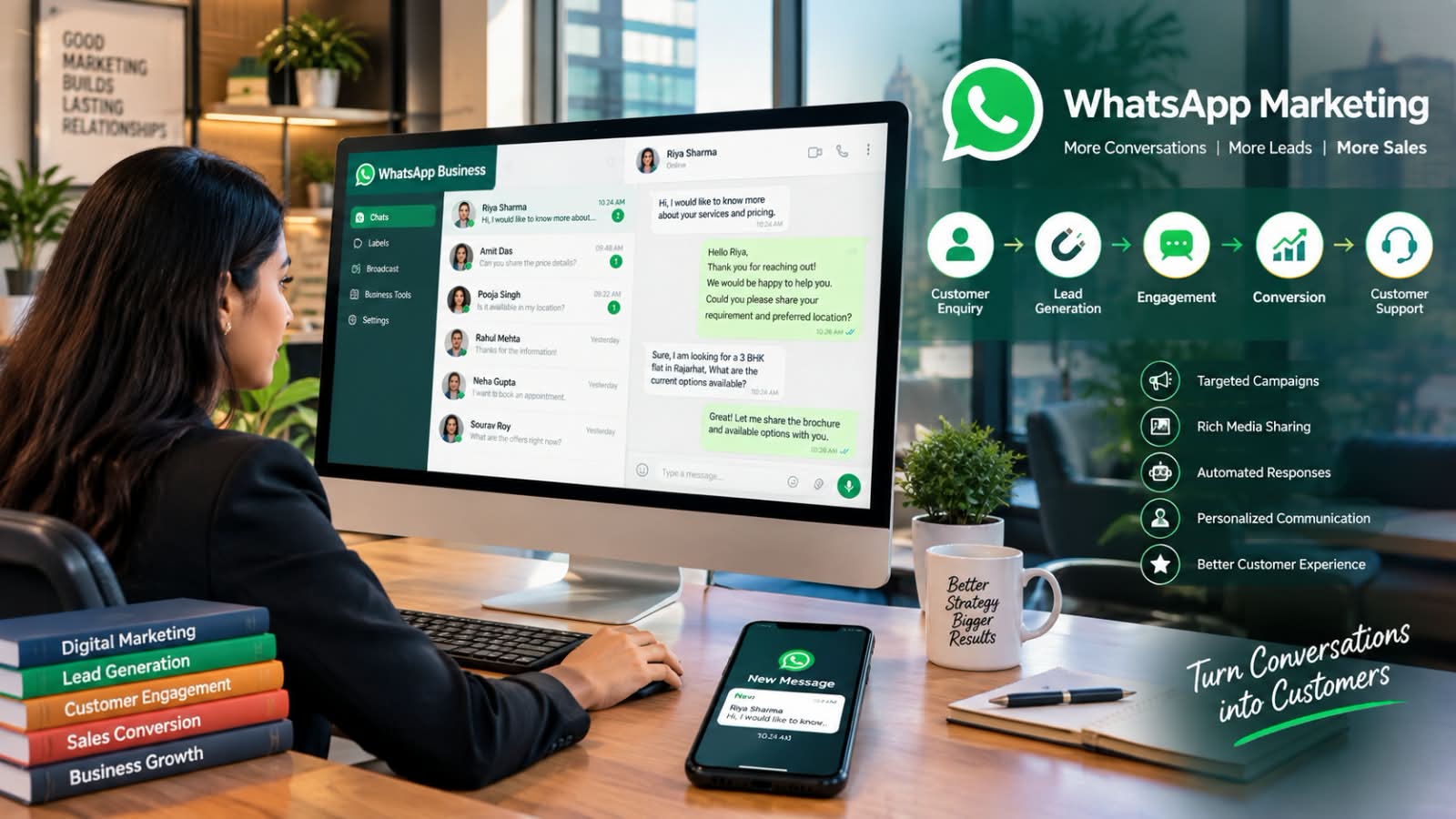
In 2026, customers expect businesses to be fast, accessible, and easy to communicate with. While social media and search engines remain important for business growth, WhatsApp marketing has become one of the most effective ways for businesses to connect with customers, generate leads, provide support, and increase sales.
With billions of people using WhatsApp worldwide, businesses can use the platform not just for communication, but also for customer engagement, lead generation, sales, promotions, and customer service.
What Is WhatsApp Marketing?
WhatsApp marketing is the use of WhatsApp to promote products or services, communicate with customers, generate leads, provide customer support, and build long-term relationships.
Businesses can use WhatsApp Business to create professional business profiles, share product or service information, send updates, answer customer queries, and follow up with potential customers.
Unlike traditional marketing channels, WhatsApp allows businesses to communicate with customers through a platform they already use every day.
Why Is WhatsApp Marketing Important for Businesses in 2026?
1. Customers Want Instant Communication
Modern customers do not want to wait hours or days for a response. Whether they are asking about a product, requesting a quotation, checking availability, or looking for more information, they expect a quick response.
WhatsApp for business makes it easier to communicate with customers instantly and create a better customer experience.
For local businesses especially, WhatsApp can become an important channel for handling enquiries and converting interested prospects into customers.
2. WhatsApp Can Help Generate More Leads
One of the biggest advantages of WhatsApp lead generation is the ability to turn customer interest into direct conversations.
For example, a customer may see your Facebook or Instagram advertisement and click a “Send Message on WhatsApp” button. Instead of sending the customer through multiple pages, you can immediately start a conversation.
This can make the lead generation process faster and more convenient.
Businesses can use WhatsApp to:
Capture new leads
Answer product enquiries
Share pricing information
Send brochures and catalogues
Schedule appointments
Collect customer requirements
Follow up with potential customers
3. WhatsApp Helps Businesses Nurture Leads
Generating a lead is only the first step. Many customers do not purchase immediately.
This is where WhatsApp lead nurturing becomes valuable.
Businesses can follow up with potential customers, share relevant information, answer questions, send offers, and remind them about products or services.
For example, a real estate company can use WhatsApp to send new property updates, pricing details, project videos, and site-visit reminders to interested prospects.
This helps businesses stay connected with leads instead of allowing them to become cold.
4. WhatsApp Marketing Can Increase Sales
WhatsApp is increasingly becoming an important part of the customer journey.
A customer can discover a business, ask questions, receive product information, and make a purchase decision through conversations.
Businesses can use WhatsApp sales marketing to share:
New product launches
Special offers
Discounts
Product catalogues
Limited-time deals
Appointment booking options
Payment or order-related information
The more convenient the buying process becomes, the easier it is for businesses to convert interested customers into paying customers.
5. WhatsApp Is Powerful for Customer Service
Marketing does not end after a customer makes a purchase.
Good WhatsApp customer service can help businesses maintain relationships with existing customers.
Businesses can use WhatsApp to answer common questions, provide order updates, share appointment reminders, handle complaints, and provide after-sales support.
Fast and convenient customer service can improve customer satisfaction and increase the chances of repeat business.
WhatsApp Business Automation Is the Next Big Opportunity
In 2026, businesses do not have to handle every WhatsApp conversation manually.
With WhatsApp automation, businesses can automate repetitive communication and respond to customers more efficiently.
For example, automated WhatsApp workflows can be used for:
Instant lead responses
Frequently asked questions
Appointment reminders
Follow-up messages
Order notifications
Customer feedback
Promotional campaigns
Lead qualification
Businesses can also combine WhatsApp marketing with AI automation to create faster and more personalized customer communication.
WhatsApp Marketing + AI: A Powerful Combination
The combination of AI and WhatsApp marketing can make customer communication significantly more efficient.
An AI-powered WhatsApp assistant can respond to common questions, collect customer requirements, qualify leads, recommend relevant products or services, and pass important conversations to a human sales representative when required.
For businesses receiving a large number of enquiries, this can reduce manual workload while helping ensure that potential customers receive timely responses.
WhatsApp Marketing for Local Businesses
For local businesses in India, WhatsApp marketing can be particularly useful.
Restaurants, clinics, salons, educational institutes, real estate companies, travel agencies, retailers, service providers, and other local businesses can use WhatsApp to communicate directly with customers.
For example:
Restaurants can share menus, offers, and reservation information.
Real estate companies can share property details and arrange site visits.
Educational institutes can send admission updates and course information.
Travel agencies can share packages, itineraries, and booking information.
Clinics can send appointment reminders and important updates.
This makes WhatsApp marketing for small businesses a practical strategy for building customer relationships and generating enquiries.
How to Build a Successful WhatsApp Marketing Strategy
Simply sending promotional messages is not enough. A successful WhatsApp marketing strategy should focus on providing value to customers.
Here are some important practices:
Use a Professional WhatsApp Business Profile
Add your business name, description, website, location, business hours, and relevant information to make your profile trustworthy.
Send Relevant Messages
Avoid sending unnecessary promotional messages. Share information that is useful and relevant to the customer.
Respond Quickly
A fast response can make a significant difference when a customer is comparing multiple businesses.
Personalize Your Communication
Use customer information and previous interactions to make messages more relevant rather than sending the same generic message to everyone.
Automate Repetitive Tasks
Use WhatsApp Business automation to handle common questions, instant responses, reminders, and basic lead qualification.
Always Get Proper Customer Consent
Businesses should follow WhatsApp's applicable messaging rules and privacy requirements and communicate with customers appropriately.
Final Thoughts
In 2026, WhatsApp marketing is no longer just a communication tool—it can be a complete customer engagement and conversion channel.
From WhatsApp lead generation and customer engagement to sales, follow-ups, automation, and customer support, businesses can use WhatsApp throughout the customer journey.
If your business is looking for a cost-effective way to generate more leads, nurture prospects, improve customer service, and increase conversions, building a strong WhatsApp marketing strategy should be an important part of your digital marketing plan in 2026.
The businesses that respond faster, communicate better, and make it easier for customers to take action will have a stronger advantage—and WhatsApp can play a major role in making that happen.

Best Digital Marketing Agency in Kolkata | Expert Guide
Date : 18 Sep, 2026
Why Your Business Needs WhatsApp Marketing in 2026
Date : 15 Sep, 2026
How Social Media Marketing Helps Businesses Grow
Date : 10 Sep, 2026
How Social Media Marketing Helps Businesses Grow
Date : 08 Sep, 2026
How to Use AI Tools to Automate Your Digital Marketing Workflow in 2026
Date : 01 Sep, 2026
GEO vs SEO: What’s the Future of Search Optimization?
Date : 24 Aug, 2026